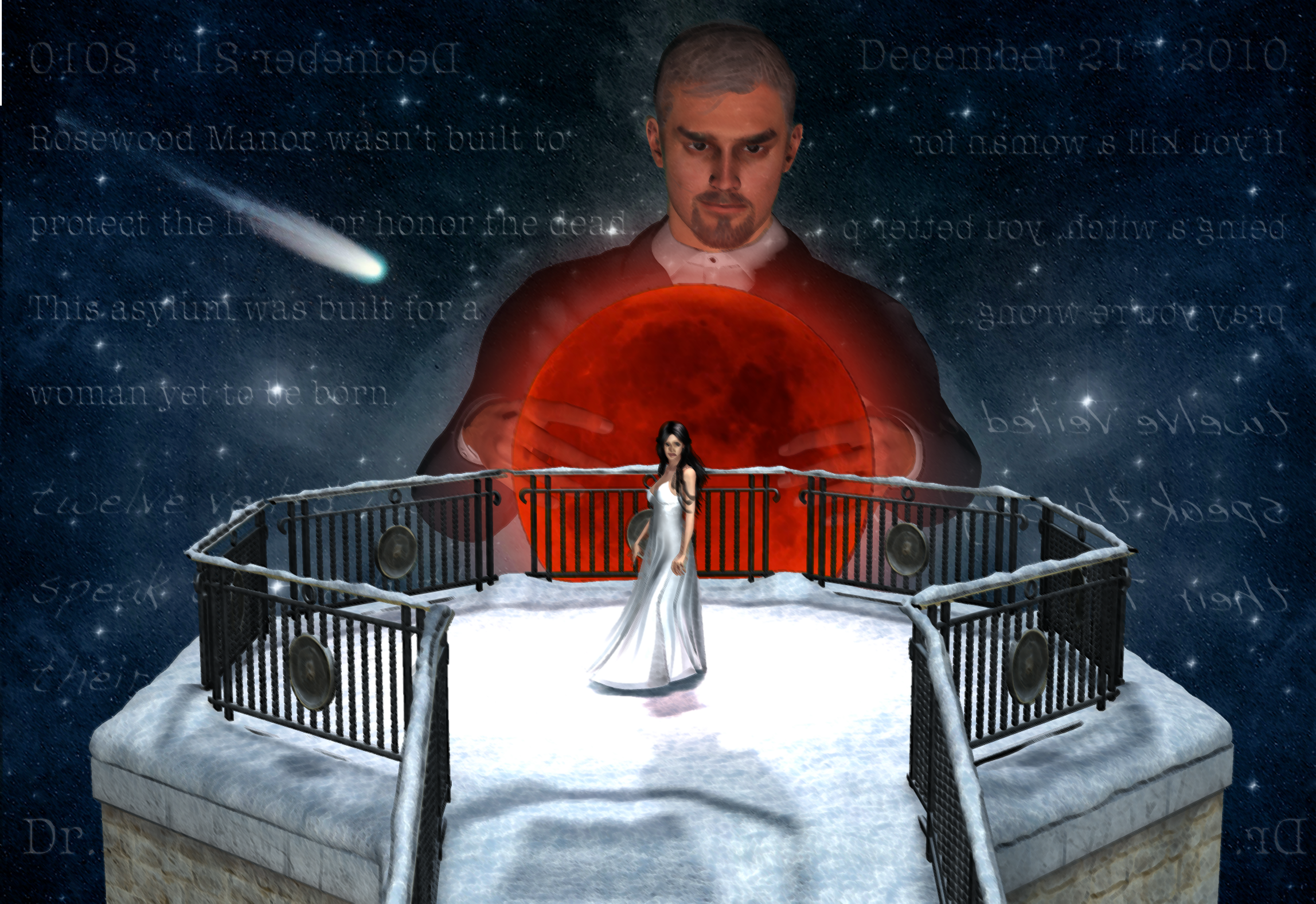
At the height of the lunar eclipse on December 21st, 2010, a Jane Doe known as Patient 28 disappeared from her room at Sabbath Day Asylum.
I was her doctor. And this blog is my confession…
Patient 28 was registered into Sabbath Day Asylum on the morning of June 21, 2004. On arrival, she was catatonic, unresponsive to external stimuli.
What records we received indicated our Jane Doe was 33 years old. She was an unknown identity, it appeared, by design. In addition to having no name, Patient 28 didn’t have any fingerprints. The tips of her fingers were smooth. She wasn’t mutilated. Patient 28 was born this way.
What records we received for Patient 28 came sealed in an envelope: a post-it note on a photo, paper-clipped to a letters and 3 checks.
The 1st letter was signed by B. Grin, Esquire and instructed Sabbath Day to cash the first check immediately. It was enough money to cover 7 years of care for Patient 28 at a generous rate of inflation.
The 2nd check was a donation to Sabbath Day Asylum, enough money to cover ten 7-year stays at a generous rate of inflation. But this check was postdated January 1, 2011… as was the 3rd check, but this one was made payable to me…
The instructions were explicit. Patient 28’s stay at Sabbath Day Asylum was contingent upon me, the managing physician, caring for and treating her.
At the time, I didn’t realize I knew her.
Aden Moss
The 2nd letter was a handwritten note from Patient 28. It was dated six month prior…
If you’ve been to Sabbath Day Hollow, then you’ve seen Rosewood Manor, the sprawling mansion built by ill-equipped villagers in the late 1600’s, now home to the “mystically” challenged.
And if you’ve seen of our asylum, more than likely, you’ve been cautioned about the lesson our forefathers were taught over 300 years ago…
“If you kill a woman for being a witch,
You better hope you’re wrong.”
Residents of Sabbath Day Hollow believe the asylum that casts a shadow over our village was built as retribution to a vengeful witch executed in 1692… that in fearing for their souls, our ancestors built a refuge for women accused of witchcraft across New England.
My friends and neighbors are mostly correct. A woman was executed for witchcraft on these grounds. And these walls have remained a sanctuary for the persecuted.
But Rosewood Manor wasn’t built to honor the dead or protect the living…
Our forefathers built this house for a witch yet to be born.
Executioner, Jean Rombauda, didn’t realize Anne Boleyn had requested him by name, nor did the French swordsman recall meeting her in the past. Still, while everyone knew about Henry VIII’s infamous second wife, Jean couldn’t shake the feeling that Anne Boleyn’s execution on May 19, 1536, was more personal than routine. The experience was uncomfortably familiar, like he knew the Queen and, worse yet, had beheaded her before.
Seconds before being blindfolded, Anne Boleyn locked gazes with Jean Rombauda. When she noticed her reflection starring back, she smiled and whispered something. While no one other than Jean knew what she had said, it was evident the executioner was visibly shaken, uncharacteristically sympathetic to England’s condemned Queen. Out of kindness, he committed to slicing off her head with one forceful blow to the back of her neck. And as he swung, as if to grant Anne Boleyn the perception of living a few seconds more, Jean Rombauda shouted, “Where is my sword?”
Jean Rombauda never repeated what Anne Boleyn had whispered to him. Spooked by the experience, he distanced himself from any notoriety that came with being the Queen’s executioner. He eventually stopped performing executions altogether and moved to the french countryside, where alone he lived to be a very old man.
…
Years later, on the moonlit night of an old man’s death…
Ill with a fever, Jean Rombauda counted along with a distant church bell. Upon hearing an unexpected thirteenth toll, he opened his eyes one last time.
Beside his bed, paying her respects was a hooded woman covered in white lace and ivory silk. By candlelight, the regal woman’s diamonds sparkled like a constellation in the sky. She seemed more celestial than human, so Jean asked, “Are you an angel, here to escort me to heaven?”
The woman chuckled and lower her hood. “Who are the angels,” she asked? “Surely, not me.”
After removing a glove, the woman leaned in and caressed her exposed hand along Jean’s cheek. “We have never met, dear heart,” she explained. “But you knew my mother, you knew her well.”
Jean squinted at the visitor through his fever. The woman’s frosted skin glowed iridescently like the moonlight, yet her insanely red hair burned like a torch.
When Jean realized who the woman was at his bedside, he shed a tear and asked, “Are you here to avenge your mother, Your Grace? Have you come to collect my soul?”
“No, Executioner,” the woman replied, while tucking wisps of grey hair behind his ear. “I am here to set you free.”
…
Bedridden in a stone cottage on the French countryside, alone with the Virgin Queen in a sliver of time that proceeds the midnight hour, an old man named Jean Rombauda exhaled a final time.
As he did, Queen Elizabeth I waded deep into the eyes of her mother’s executioner. After a spell, she smiled at Anne Boleyn’s reflection starring back at her. Together, the two witches then recited the words Jean Rombauda, the executioner, had refused to ever speak…
“My life goes on but not the same. Into your eyes, my face remains.”





 At the height of the lunar eclipse on December 21st, 2010, a Jane Doe known as Patient 28 disappeared from her room at Sabbath Day Asylum.
 What records we received for Patient 28 came sealed in an envelope: a post-it note on a photo, paper-clipped to a letters and 3 checks.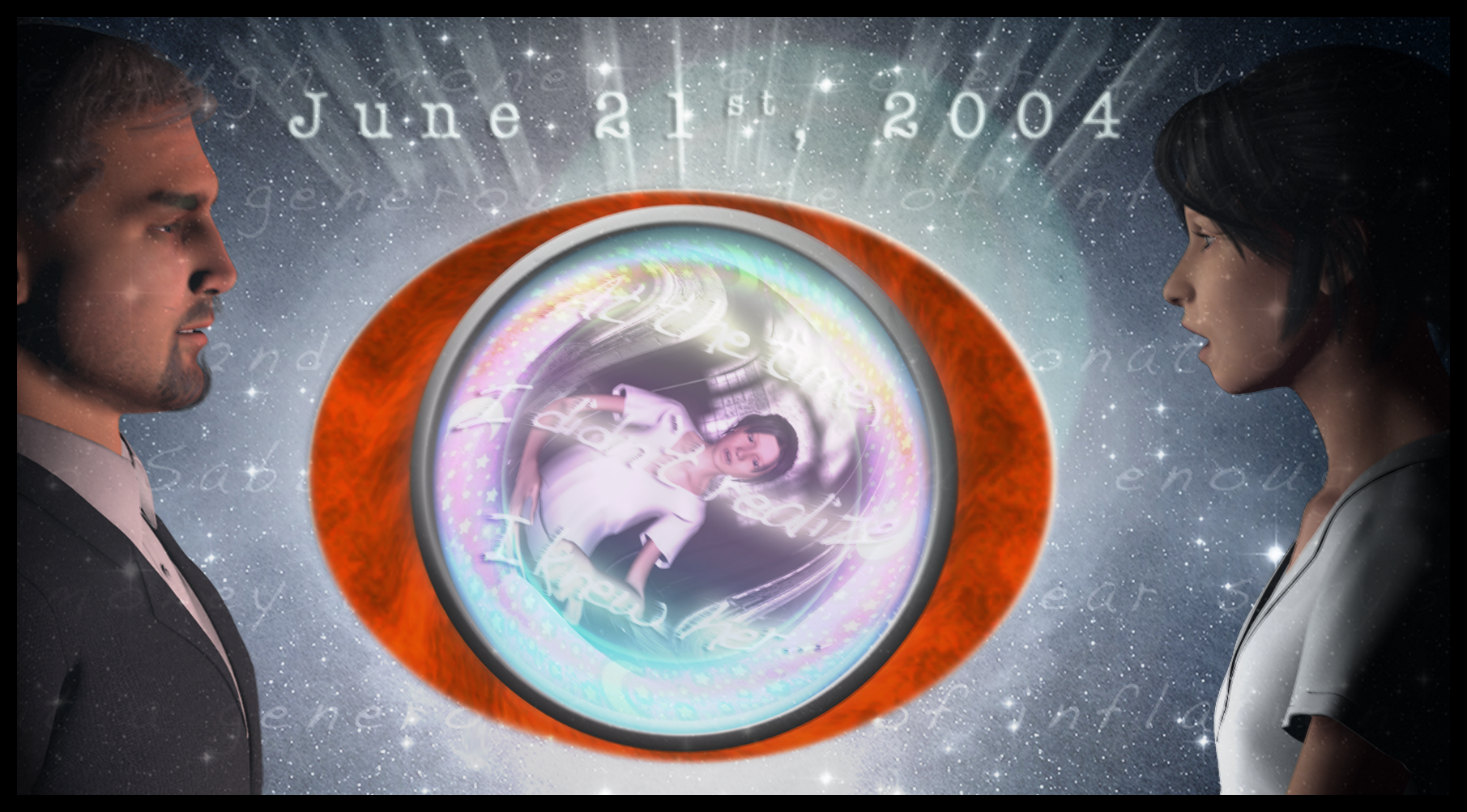






 Guy Penn
